
"I Love You Now (More Than Words Can Say)©"
Release Date: December 1st, 2025
Lyrics by M. S. McKenzie (Unless Otherwise Noted) | Music Performed by Songs Across America or American Storyteller Music, All Songs Are Protected by ©
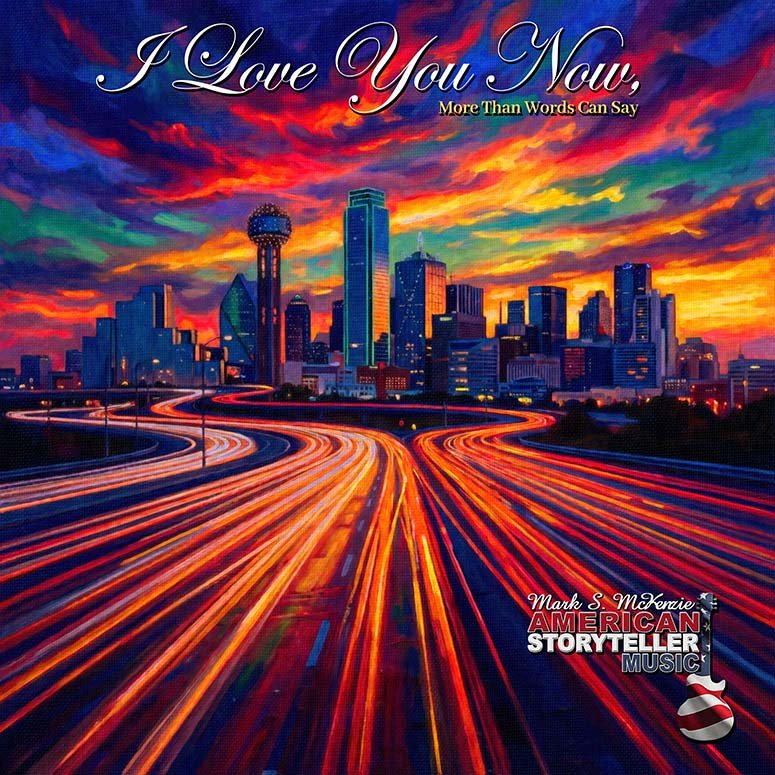
Streaming Services Music Link
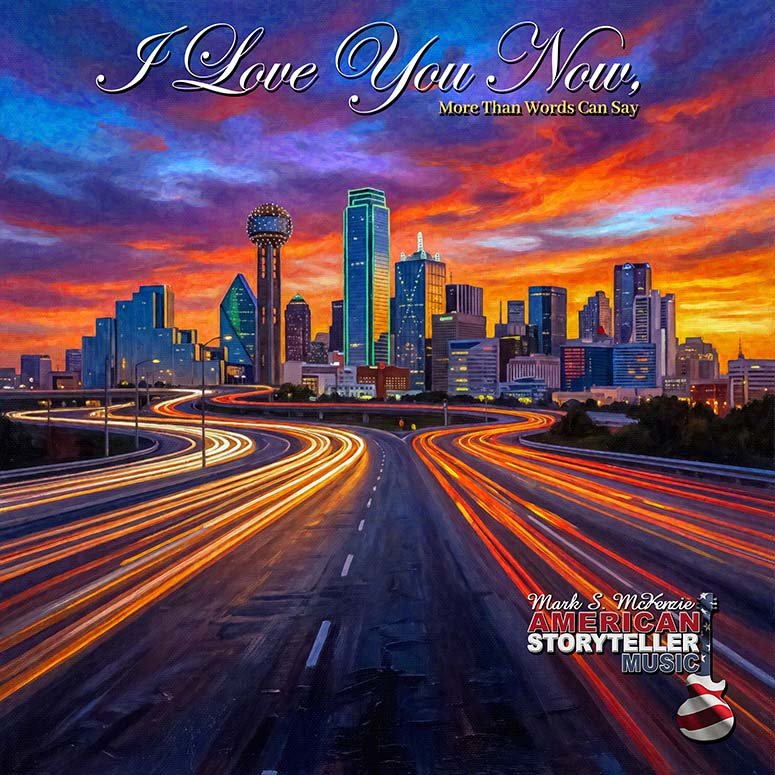
Streaming Services Music Link
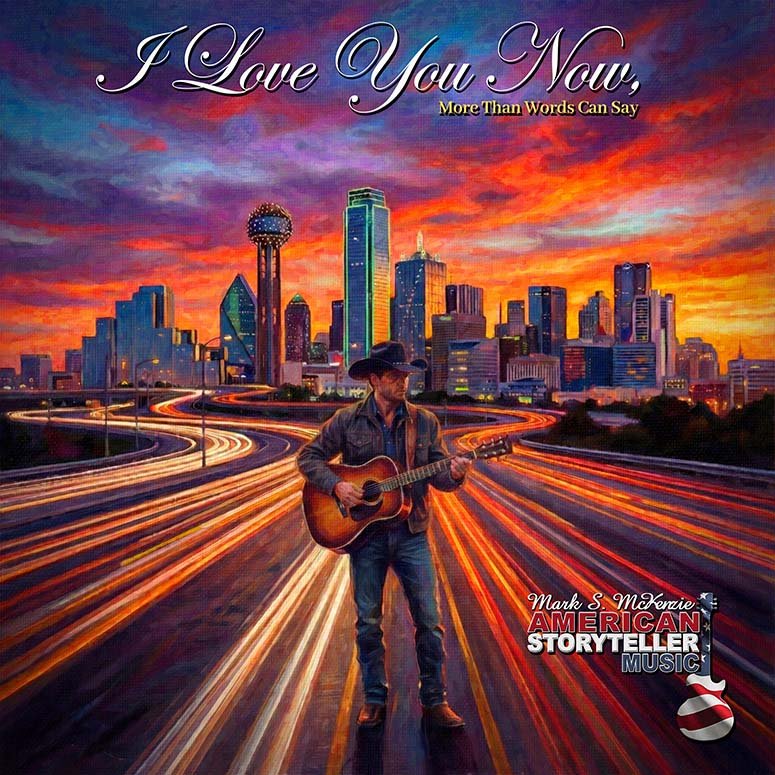
Streaming Services Music Link
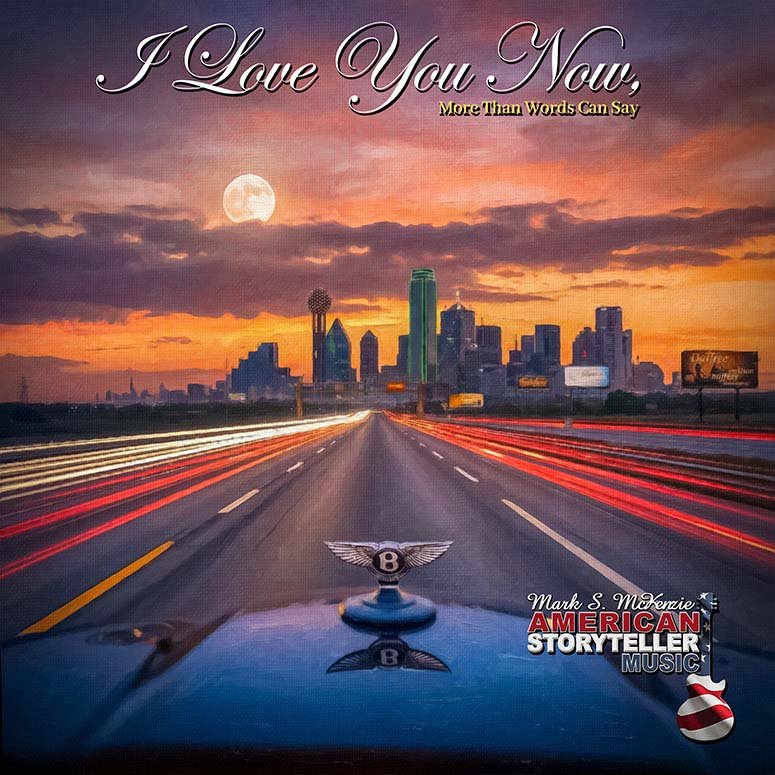
Streaming Services Music Link
~ Associated State Links ~
[ AL Home Pg. | AL Gallery Pg. || TX Home Pg. | TX Gallery Pg. ]
"I Love You Now (More Than Words Can Say)"
Why I Wrote This Song
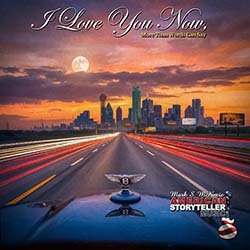
I wrote "I Love You Now" about the kind of damage nobody means to do. There is no villain in this one and no betrayal. What happened is that a man got comfortable, and comfort turned quietly into assumption, and he lived for years as though the person beside him would simply always be there because she always had been. Then a job moved her four hundred miles away and the house went silent, and the silence told him the truth that the easy Montgomery nights had let him avoid. That is why the first line is a confession rather than a complaint. I used to think your love would always wait. He is not asking for sympathy. He is naming what he got wrong.
The story behind the song is the word in the title, which took me a while to hear properly myself. Now is not there for the rhythm. It is the entire argument. He is not saying he loved her once or that he will love her someday when he has sorted himself out. He is saying he is doing it in the present tense, tonight, on this highway, and that love turns out to be something you have to keep choosing rather than something you get to have. That is also why the title claims love is more than words can say and then spends the whole song refusing to use that as an excuse for silence. If words are not enough, the answer is not to say less. It is to drive.
The ending is the part I am proudest of, because I did not let him win. He imagines pulling into Dallas and her answering the door, and then he imagines her coming back to Montgomery instead, and he offers the same promise either way. He does not get to control which one happens. He only gets to be the kind of man who means it regardless, and that is what separates a real vow from a negotiation. Songs Across America is full of highways, and most of them are about escape or discovery. This one is about a road being used as proof, where every mile is the argument he could not make with language. I hope anyone who has taken somebody for granted, which is most of us, hears the closing verse and recognizes it as a list of instructions. Say what you mean. Live in the moment rather than some place in between. Carry your share. Meet them where they are.
Genre:
Long-distance power ballad in classic eighties and early-nineties romantic rock vocabulary. Electric guitar arpeggios over warm pads and a tom build that opens into full kit, with a singable melodic guitar solo quoting the chorus contour and a stadium-sized gated-snare drum break as emotional punctuation. Intimate verses push outward into motion and return with the vow finally spoken in full.
Theme:
Accountability and self-reckoning, long-distance love, complacency as a quiet form of harm, the gap between words and consistent action, personal reform, and love as effort rather than entitlement.
Primary Subject:
A man driving the long highway from Montgomery to Dallas to reach the partner whose love he assumed would always wait, and the reckoning the miles force on him.
Mood:
Regretful, yearning, and resolute. Quiet and self-incriminating at the opening, aching and cinematic on the road, building to open-hearted, unconditional promise.
Core Message:
Love is not a possession you assume will stay but a practice you choose again in the present tense. When words are not enough, the answer is not silence but action, and a real vow is one you keep offering regardless of which way the outcome falls.
Original Lyrics by M.S. Mckenzie, All Rights Reserved
[Instrumental Intro:]
[Opening Verse]
I used to think your love would always wait…
Right there beside me, never asking for much
Our Montgomery nights felt easy and safe…
‘til your new job pulled you away from my touch
The house got really quiet when you went away
And sitting here, under the light of a half-lit lamp
I learned that I was living like forever would stay
And you took my doubt and hesitation like a champ
[Lift]
Now the pain of each mile is an ache I can’t bare
I trace your face in the distorted shapes of the night
As I drive this long, lonely highway all the way there
And I imagine your embrace in the pale moonlight
[Chorus]
I love you now:more than words can say…
From Montgomery to Dallas, I feel you far away
I love you now:more than actions can show…
And I cross this lonely highway…
…just to hold you close
[Guitar Solo: ]
[Verse 2]
Passing exits like chapters of a book I’ve never read
I’ll drive this damn highway no matter the season
Billboards proclaiming the things we’ve never said
Up ahead the bright lights of Dallas fill the horizon
Counting miles like minutes on the clock in my head
Trying to be the better person I know I should be
And showing that I’m worthy to lie in your bed
Wrapping my arms around you like limbs of a tree
[Lift]
Now the pain of each mile is an ache I can’t bare
I trace your face in the distorted shapes of the night
As I drive this long, lonely highway all the way there
And I imagine your embrace in the pale moonlight
[Chorus]
I love you now:more than words can say…
From Montgomery to Dallas, I feel you far away
I love you now:more than actions can show…
And I cross this lonely highway…
…just to hold you close
[Bridge]
When you need me just call and I will not delay
No more taking your heart like it will always stay
I love you now:more than any words can say…
I’m done with those emotions that pushed you away
[Drum Solo:.]
[Closing Verse]
So I am learning to always say what I mean
To live in the moment, not some place in between
When your world is heavy, I will carry my share
And when you are lonely, I will meet you there
[Lift]
Now the pain of each mile is an ache I can’t bare
I trace your face in the distorted shapes of the night
As I drive this long, lonely highway all the way there
And I imagine your embrace in the pale moonlight
[Chorus]
I love you now:more than words can say…
From Montgomery to Dallas, I feel you far away
I love you now:more than actions can show…
And I cross this lonely highway…
…just to hold you close
[Final Chorus]
I love you now:more than words can say…
No more pride in my heart or games I used to play
I love you now:more than actions can show…
Let the miles hear my promise let the night give way…
So when I pull into Dallas and you answer the door
Or you come back to Montgomery in the light of day
I will love you now:more than I ever did before…
And I will spend the rest of my life this way
[Trailing Instrumental Outro:]
Song Description
“I Love You Now (More Than Words Can Say)” is a long-distance power ballad built around a quiet moral awakening: the realization that love is not a possession you assume will remain, but a practice you must actively choose:especially when distance exposes the complacencies you could hide at home. The lyric’s emotional force comes from its central correction. The narrator is not pleading for love so much as confessing that he misunderstood it, and then proving:mile by mile:that he is learning.
The instrumental framing matters. Electric guitar arpeggios over warm pads and a tom-driven build signal classic 80s/early-90s romantic rock vocabulary: yearning as a slow ignition, then the full kit opening like the moment you finally say what you’ve been avoiding. The song’s story follows that same architecture. It starts inside a quiet room, then pushes outward into motion, then returns with a vow that’s finally spoken in full sentences.
The opening verse is striking for its self-incrimination. “I used to think your love would always wait” is not simply regret; it’s a diagnosis of entitlement-by-habit. The narrator admits he treated devotion as static infrastructure:“never asking for much”:and the specificity of “Our Montgomery nights felt easy and safe” is not just scene-setting. It implies a kind of comfort that can turn into emotional laziness: routines so gentle they stop demanding intention. The shift is catalyzed by something realistic and modern:“your new job”:which is important because it makes the distance feel earned rather than melodramatic. This isn’t a breakup because of betrayal; it’s a relationship stressed by life’s logistics.
The imagery of the “half-lit lamp” is quietly effective. It mirrors the song’s title premise: “more than words can say” versus the half-lit understanding he used to live with. In that dimness, he notices what he ignored: “The house got really quiet when you went away.” The line is plain, but the plainness carries weight because it’s physical and undeniable:silence as consequence. And then comes the line that reveals the partner’s emotional labor: “you took my doubt and hesitation like a champ.” That phrasing contains gratitude and guilt at once. It implies the partner has been carrying the narrator’s ambivalence for a long time, absorbing the uncertainty with patience that now feels undeserved.
The first lift is where the song turns cinematic. The language opens up into nocturnal highway imagery: the ache of miles, the face traced in “distorted shapes of the night.” That distortion is psychologically accurate:fatigue, headlights, the way longing projects images onto darkness. The narrator isn’t just traveling; he’s hallucinating tenderness into the road. And crucially, he isn’t romanticizing the drive as freedom. He calls it “long, lonely.” The loneliness is both literal and earned.
The chorus resolves the song’s philosophical tension with a smart reversal: it claims that love exceeds language, then immediately insists that the narrator must still do something about it. “I love you now:more than words can say” is not an excuse for silence; it becomes a reason to cross the highway. The geography:Montgomery to Dallas:does what the best place-naming does: it grounds the emotion without becoming a travelogue. The phrase “I feel you far away” is simple, but it’s also emotionally specific: not “I miss you,” but “I feel you,” implying an attachment that remains embodied even at distance. The chorus’s final line:“just to hold you close”:is almost deliberately unornamented. After the poetic lift, it lands on human necessity. Touch as proof.
Verse 2 is where the songwriting gets more textured and literary. “Passing exits like chapters of a book I’ve never read” is a sharp metaphor: the narrator is moving through a story he failed to learn earlier, now forced to read it in real time. “Billboards proclaiming the things we’ve never said” is another strong detail. The world around him is loud with declarations:sales pitches, slogans:while his own relationship has suffered from withheld words. The bright lights of Dallas filling the horizon is a classic cinematic image, but it gains nuance because it’s framed as a destination with emotional stakes, not just glamour.
The narrator’s inner monologue becomes explicitly ethical: “Trying to be the better person I know I should be / And showing that I’m worthy to lie in your bed.” That “worthy” line is telling. It implies he recognizes intimacy as something that must be deserved through consistency, not assumed through history. And the tree image:“Wrapping my arms around you like limbs of a tree”:shifts the song from passion to shelter. Trees don’t just hold; they steady. It’s an image of protective love, not possessive love.
The bridge is the song’s most direct act of repentance. “No more taking your heart like it will always stay” is the clearest admission of his earlier mistake, and it reframes the entire narrative: his partner didn’t simply move away; she was pushed, at least partially, by the emotional climate he created. “I’m done with those emotions that pushed you away” is an important choice of wording:he doesn’t blame her decision, and he doesn’t pretend the distance is random. He names himself as a causal factor. That’s the song’s maturity.
The drum solo is not merely stylistic nostalgia. “Big gated snare feel… stadium sized” operates as emotional punctuation:the moment the internal vow becomes public, performative, undeniable. It’s the song’s conversion moment rendered in production terms: the private man in the half-lit room has turned into someone willing to announce change out loud.
The closing verse then carries through on the promise by articulating a new behavioral code. “Learning to always say what I mean” directly counters the earlier doubt and hesitation. “Live in the moment, not some place in between” captures the emotional limbo that often kills long-distance relationships: the way people postpone commitment until it’s convenient. The lines about carrying a share and meeting loneliness are practical rather than poetic, which is exactly the point. This is love translated into logistics:showing up, distributing weight, bridging gaps.
The final chorus is where the lyric fully earns its title. “No more pride in my heart or games I used to play” is the most explicit renunciation of the narrator’s old self, and it clarifies what “more than words” really meant all along: not that words are insufficient, but that words must be backed by consistent action. The line “Let the miles hear my promise let the night give way” is a strong elevation:turning distance into a witness, turning darkness into something that can be overcome. And the dual-ending scenario:either he pulls into Dallas and she answers the door, or she comes back to Montgomery “in the light of day”:is quietly profound. It refuses to control the outcome. The narrator doesn’t demand that love be proven by her return. He offers love as something he will practice regardless of which direction the highway runs.
Ultimately, “I Love You Now (More Than Words Can Say)” is less about longing than about accountability. The highway is not just a symbol of distance; it is a measure of effort. The half-lit lamp is not just mood lighting; it’s the dim awareness he lived in until absence forced clarity. The song’s emotional payoff is that it doesn’t end with a reunion fantasy; it ends with a reformed posture. The narrator finally understands that “now” is not a lyric flourish:it’s a commitment to present-tense love, repeated until it becomes a life.









Featured Songs


.jpg)

Leave a Tip