
"Drink in The Sky©"
Release Date: 08/23/2026
Lyrics by M. S. McKenzie | Performed by Songs Across America, Protected by Copyright
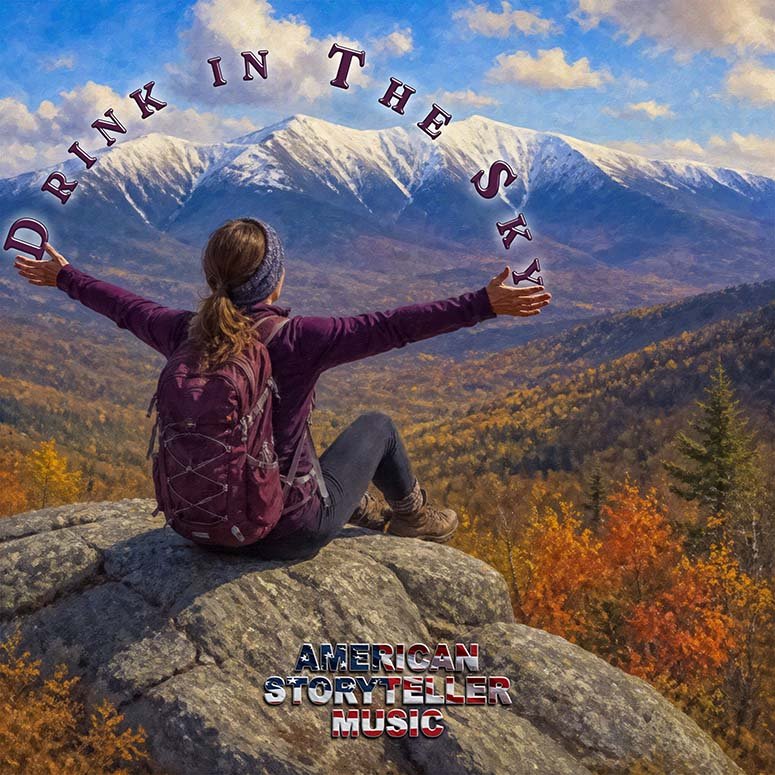
Streaming Services Music Link for Version I
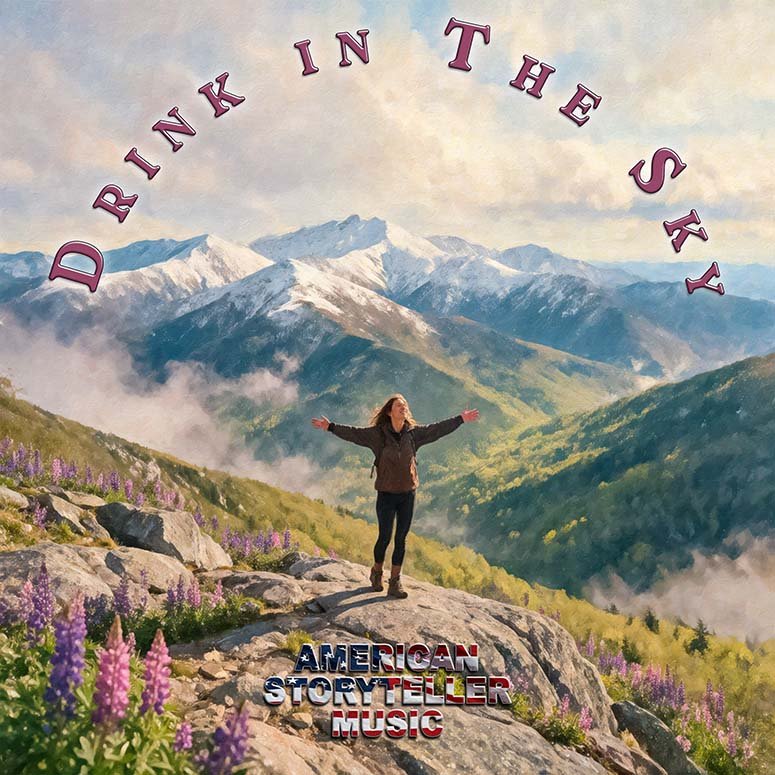
Streaming Services Music Link for Version II
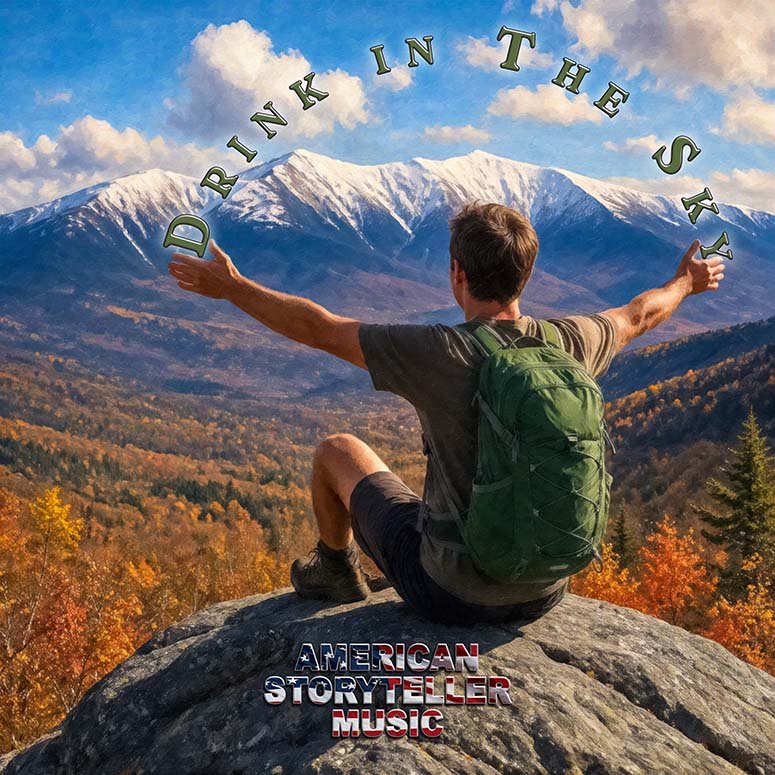
Streaming Services Music Link for Version III
[ NH Home Pg. | NH Gallery Pg. | NH Attractions Pg. | Best Small Towns | Best Small Cities ]
Why I Wrote This Song
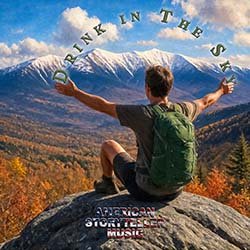
I wrote "Drinkin' the Sky" as a conservation hymn disguised as a mountain-climbing anthem, because the phrase itself, stand on Jefferson and drink in the sky, is meant to describe an actual physical sensation, standing at altitude and feeling the whole White Mountains landscape pour into you. I wanted that sensation to be the reward, rather than any sense of conquering the summit.
The story behind the song is the loss I let sit inside the beauty, the Old Man of the Mountain has tumbled and gone, but his profile still hangs in the story. I wanted that collapsed rock formation to carry the whole ethic of the song, a reminder that even the steadfast and strong must be held with great care and not for glory, because New Hampshire genuinely lost something permanent, and I didn't want the song to pretend the mountains are indestructible.
What I care about most is the refrain I built the whole song around, leave it a little more loved than you found it. I wanted that to be a plain, actionable instruction rather than vague reverence, something a hiker could actually carry down off Mount Adams with them. Songs Across America has plenty of songs admiring wild places. This one asks something of the listener in return for the admiration.
Genre:
Warm, fingerpicked folk anthem built on a rising, communal chorus, structured as a climb through New Hampshire's peaks, gorges, and lakes across the changing seasons.
Theme:
Conservation as active practice rather than passive admiration, the loss of the Old Man of the Mountain as a cautionary memory, the White Mountains' peaks and rivers, and respect expressed through care rather than ownership.
Primary Subject:
New Hampshire's White Mountains, from the Connecticut River and Mount Washington to Flume Gorge, the Kancamagus Highway, and Lake Winnipesaukee.
Mood:
Reverent, wistful, and quietly instructive throughout.
Core Message:
Wild places aren't ours to own, only to borrow carefully, and the Old Man of the Mountain's collapse is proof that even the most steadfast landmarks need to be held with care rather than taken for granted. The least we can do is leave them a little more loved than we found them.
"Drink in The Sky"
Original Song Lyrics: Written by M. S. McKenzie, All Rights Reserved
[INTRO: Softly sung over a fingerpicked guitar:]
I wake with the mist on the mountain spine,
And breathe deep the sweet scent of pine
In this moment all life and fate intertwine
Respect all, for this land is yours and mine...
[VERSE 1]
Where the Connecticut River runs silver and wide,
Past green fields that the morning frost kisses,
And Mount Washington wears her white crown with pride,
As the wind tells the tale of what was and what is…
Flume Gorge thunders with an ancient refrain,
Through walls of granite, moss-covered and steep,
And the Kancamagus in October's bright stain
Awakens colors your soul wants to keep...
[CHORUS: Lift your voice here — this is the hook:]
So, stand on Jefferson and drink in the sky,
Let the White Mountains hold what you've carried…
This land doesn't want you to own it, just try
Leaving it a little more loved than you found it.
Just leave it a little more loved than you found it.
[VERSE 2]
Lake Winnipesaukee at midsummer's glow
Throw diamonds upon the water so tender,
And the loons call across to the coves down below
In a language too old to surrender.
The Old Man of the Mountain has tumbled and gone,
But his profile still hangs in the story…
A reminder that even the steadfast and strong
Must be held with great care and not for glory.
[CHORUS]
So, stand on Mount Adams and drink in the sky,
Let the White Mountains hold what you've carried…
This land doesn't want you to own it, just try
Leaving it a little more loved than you found it.
Just leave it a little more loved than you found it.
[BRIDGE: Musically shift here — softer, building:]
From Portsmouth's salt harbor where gulls trace the tide,
To the notch roads where moose step in stillness,
It was never a question of taking a side…
The earth gives, and we answer with willingness.
Every birch, every brook, every granite-grey peak
Is a promise we make without speaking…
To the children not born and the quiet next week,
To the wild that won't ask, only seek us.
[VERSE 3]
So, when autumn burns scarlet through Bear Notch and Franconia,
And snow wraps the Presidentials in cold embrace,
Remember the stewardship etched in each stone here…
This beauty's not ours to erase...
The White Mountains thunder, "You're passing through here,"
Lake Sunapee serves up a wonderful hue,
And the seacoast at sunset makes it perfectly clear:
Be grateful and protect what’s been given to you…
[FINAL CHORUS: all voices, full and bright]
So, stand on Washington and drink in the sky,
Let the White Mountains hold what you've carried…
This land doesn't want you to own it, just try
Leaving it a little more loved than you found it.
Just leave it a little more loved than you found it.
Song Description
"Drink in The Sky" is a sweeping, reflective tribute to New Hampshire that uses its mountains, rivers, lakes, forests, and seacoast to explore a much larger idea: that beautiful places are not possessions, but inheritances temporarily entrusted to us. The song moves across the state almost like a musical journey, beginning in the misty high country and following familiar landmarks through the White Mountains, the Lakes Region, the Connecticut River Valley, and eventually to Portsmouth and the Atlantic coast. Yet beneath the geographic imagery is a clear philosophy of stewardship. The landscape is presented not simply as scenery to admire, but as something living, ancient, and deserving of respect.
The opening establishes that philosophy immediately. With only a softly sung vocal and fingerpicked guitar, the narrator awakens among mountain mist and pine, experiencing nature as something intimate rather than distant. The line "Respect all, for this land is yours and mine"introduces a sense of shared responsibility, but the rest of the song gradually deepens that thought: belonging to a place does not mean possessing it. Instead, it means accepting an obligation to care for it. From its first moments, the song therefore feels less like a conventional state anthem and more like a quiet covenant between people and the land around them.
The first verse expands outward into some of New Hampshire's most recognizable landscapes. The Connecticut River winds through frosted fields, Mount Washington rises above the state wearing its winter crown, and Flume Gorge carries the sound of water through ancient granite walls. The Kancamagus Highway then brings a burst of autumn color, turning the natural world into something almost emotional—the kind of beauty a person instinctively wants to preserve in memory. These images establish New Hampshire as a place shaped by elemental forces: water, granite, wind, forest, frost, and changing seasons. The landscape feels older than the people moving through it, and that sense of permanence becomes important to the song's message.
The chorus introduces the central image and the song's defining phrase: "stand on Jefferson and drink in the sky." It is both a literal invitation to stand high in the White Mountains and an expression of awe—an encouragement to stop, look outward, breathe deeply, and absorb the enormity of the world around you. The next line, "Let the White Mountains hold what you've carried," adds an emotional dimension, suggesting that wild places can temporarily relieve us of burdens we have been carrying through ordinary life. But the chorus does not stop at personal healing. It immediately turns that experience of beauty into responsibility with the song's most important idea: "This land doesn't want you to own it… Leaving it a little more loved than you found it."
That repeated final line becomes the ethical heart of the song. Rather than demanding grand gestures, it proposes a simple standard: whatever place passes through our hands should be left better cared for because we were there. "Loved" is especially effective because it makes conservation personal. The song is not arguing for protection through statistics, regulation, or abstract environmental language; it is asking listeners to treat mountains, forests, lakes, wildlife, and coastlines with the same consideration they might extend toward something—or someone—they genuinely cherish. Stewardship becomes an act of affection.
The second verse moves toward Lake Winnipesaukee, where summer sunlight scatters across the water and loons call between the coves. These quieter images provide a contrast with the grandeur of Mount Washington and the ruggedness of Flume Gorge, reminding the listener that New Hampshire's beauty exists in stillness as much as spectacle. The fallen Old Man of the Mountain then introduces one of the song's most poignant ideas: even things that seem permanent can disappear. His vanished granite profile becomes a reminder that strength does not guarantee permanence and that familiar landmarks should never be taken for granted.
That thought gives the environmental message greater urgency. The song does not portray preservation as an attempt to freeze the world in place—nature itself changes constantly—but it distinguishes natural change from careless destruction. The disappearance of something beloved can sharpen our appreciation for what remains. When the chorus returns with Mount Adams as its viewpoint, the repeated command to "drink in the sky" feels slightly different: admiration now carries an awareness of fragility.
The bridge broadens the geography again, stretching from Portsmouth's working saltwater harbor to mountain notch roads where moose emerge into moments of stillness. Here the song becomes most explicit about the relationship between human beings and the natural world: "The earth gives, and we answer with willingness." That exchange is not presented as political or partisan—indeed, the lyric says it was *"never a question of taking a side."* Instead, caring for the natural world is framed as something more fundamental: a reciprocal responsibility that follows naturally from everything the land provides.
The bridge also shifts the song's perspective from the present generation toward the future. Birch trees, brooks, and granite peaks become part of an unspoken promise "to the children not born." This is where "Drink in The Sky" moves beyond appreciation and becomes a song about legacy. The people alive today are only temporary participants in a landscape that existed long before them and, if properly cared for, will continue long afterward. Protecting it therefore becomes an act of generosity toward people we will never meet.
The third verse gathers the song's imagery into a final seasonal panorama. Autumn spreads scarlet across Bear Notch and Franconia, snow settles over the Presidential Range, Lake Sunapee reflects its own changing light, and the New Hampshire seacoast closes the geographic circle at sunset. Against these images comes one of the song's clearest declarations: "This beauty's not ours to erase." The White Mountains themselves seem to answer, reminding humanity, "You're passing through here." That personification captures the song's entire worldview in a single thought—the mountains are the enduring presence; we are the visitors.
The final chorus appropriately moves to Mount Washington, the symbolic summit of the journey. After Jefferson and Adams have carried earlier choruses, Washington becomes the final vantage point from which the listener is invited once again to "drink in the sky." With full voices and a brighter arrangement, the chorus can feel less like the reflection of a solitary traveler and more like a communal pledge. The repeated line "Just leave it a little more loved than you found it" becomes almost anthem-like, something meant to be sung together rather than merely heard.
Musically, the lyrics suggest an expansive folk-rock or contemporary Americana arrangement with strong singer-songwriter roots. The fingerpicked acoustic opening should feel intimate and earthy, while later sections can gradually introduce piano, warm electric guitar, bass, restrained drums, strings, and broad vocal harmonies. The choruses should open dramatically without becoming bombastic, creating the sonic sensation of reaching a mountain summit and suddenly seeing the horizon spread outward. The extended instrumental outro offers room for the emotional message to linger after the final words, allowing guitars, strings, or other organic instruments to carry the feeling of open landscape into the fade.
At its core, "Drink in The Sky" is both a love song to New Hampshire and a statement about environmental responsibility. It celebrates the White Mountains, Mount Washington, the Connecticut River, Lake Winnipesaukee, Portsmouth, Franconia, Lake Sunapee, and countless smaller features of the landscape, but it refuses to treat them merely as attractions. They are part of something larger than any individual life. The song asks us to enjoy these places completely—to climb, wander, listen, breathe, and quite literally *drink in the sky*—while remembering that our greatest responsibility is ensuring that someone else will someday be able to stand in the same place and feel the same wonder.





Featured Songs


.jpg)

Leave a Tip