
"The Turning Tide©"
Release Date: 08/19/2026
Lyrics by M. S. McKenzie | Performed by Songs Across America, Protected by Copyright
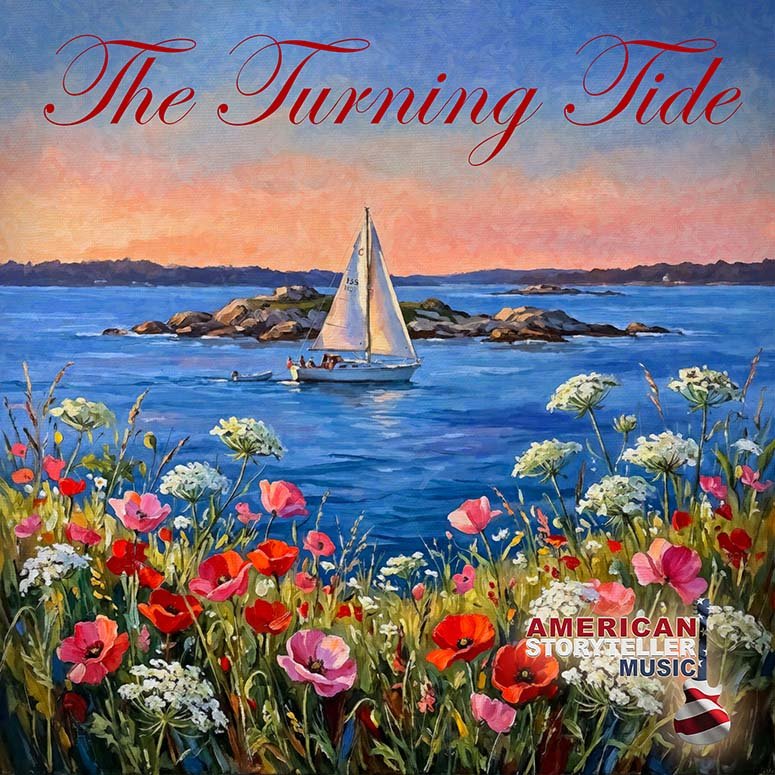
Streaming Services Music Link for Version I
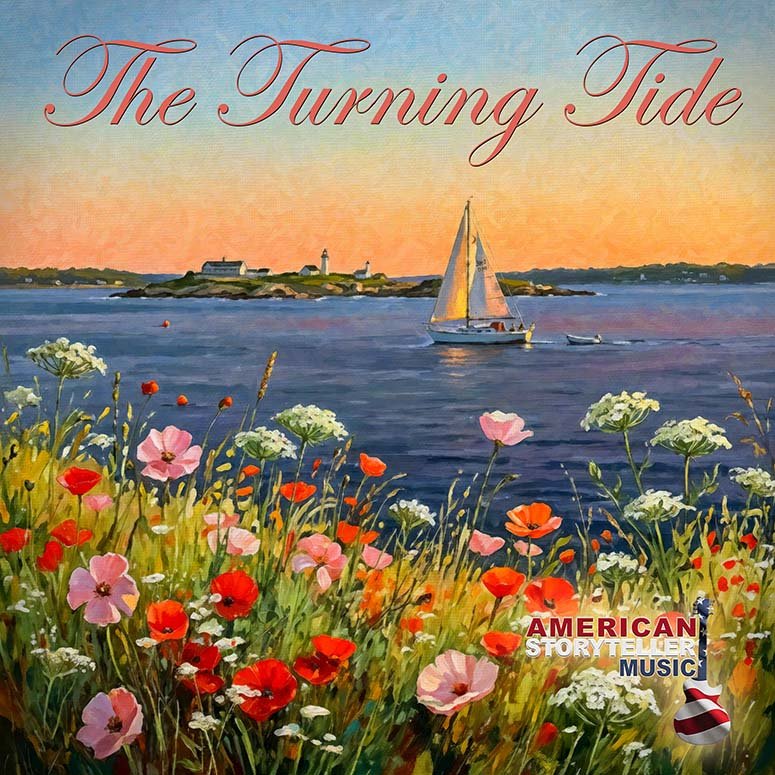
Streaming Services Music Link for Version II
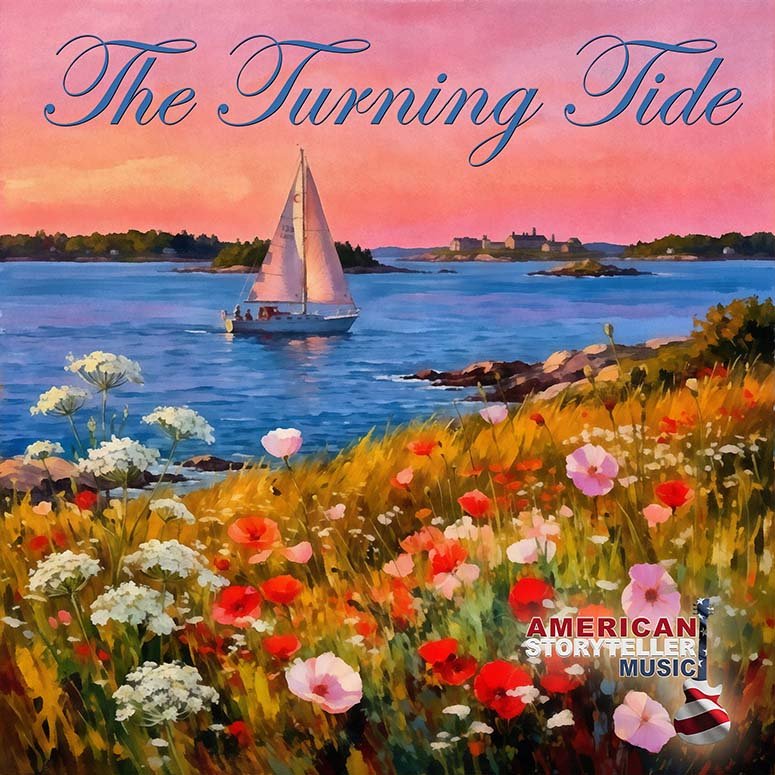
Streaming Services Music Link for Version III
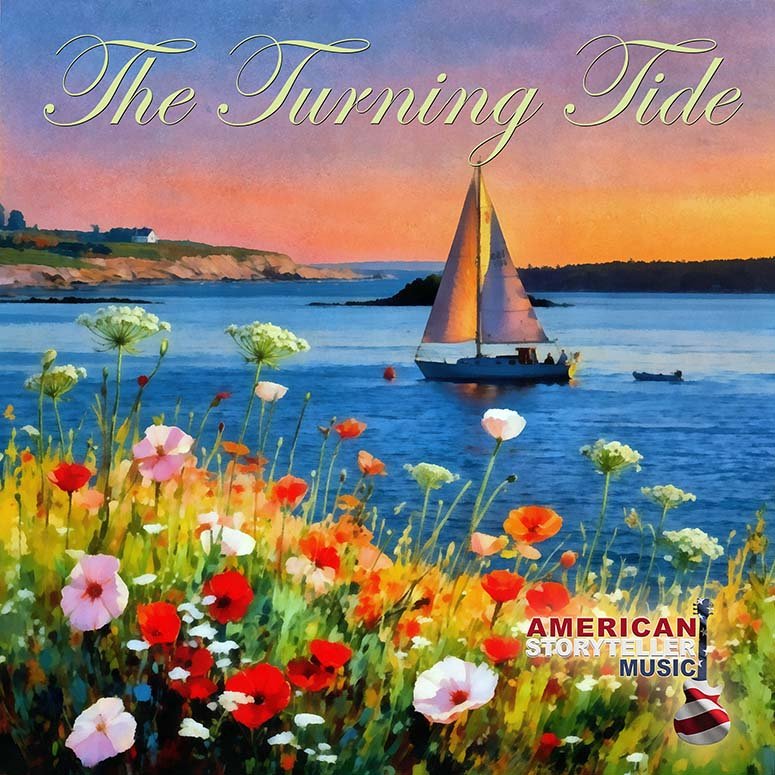
Streaming Services Music Link for Version IV
~ Associated State Links ~
[ AA Home Pg. | AA Gallery Pg. | AA Attractions Pg. | Best Small Towns | Best Small Cities ]
"The Turning Tide"
Why I Wrote This Song
I wrote "Turning Tide" about that feeling of becoming overwhelmed by schedules, obligations, conversations, and all the little demands that can gradually consume nearly every hour of the day. Sometimes what I need most is not another activity or another place to go, but simply some distance and enough quiet to hear myself think again. For this song, I imagined leaving Portsmouth by boat, following the Piscataqua River out toward the Atlantic, and watching the city slowly disappear behind me. The story behind the song begins with that very simple desire: to trade walls, alarms, and expectations for salt air, open water, and one completely unscripted day.
The Isles of Shoals gave me the perfect landscape for that journey. Appledore, Star Island, and White Island are close enough to Portsmouth that they remain connected to the mainland, yet once you are surrounded by water they can feel wonderfully removed from everything happening ashore. I wanted the narrator's outward journey to mirror an inward one, with every mile across the water stripping away a little more noise. The "turning tide" therefore became more than something happening beneath the boat. It became a metaphor for that moment when your thoughts begin to change direction and the pressure you have been carrying finally starts to loosen its grip.
I also wanted the song to acknowledge that needing solitude can sometimes be difficult for the people who love us to understand. The narrator knows that he can withdraw and that others may occasionally interpret that distance as rejection, but he is not trying to leave anyone behind. He only needs enough room around himself to recharge before returning. That is why the song ultimately brings him back toward Portsmouth as evening falls. The harbor lights lead him home to the same life he left that morning, but he returns quieter, clearer, and somehow renewed. Sometimes a change does not require leaving everything behind; sometimes all it takes is a little wind, a little water, and a turning tide.
Genre:
Yacht Rock / Adult Contemporary / Soft Rock with coastal singer-songwriter influences. Warm electric piano, smooth electric guitar, melodic bass, restrained drums, saxophone, violins, and layered vocal harmonies give the song a polished late-1970s and early-1980s character while its New England maritime setting gives that classic sound a distinctive regional identity.
Theme:
Solitude, emotional renewal, freedom from an over-scheduled life, and the restorative power of nature. The changing tide serves as both a literal maritime image and a metaphor for releasing accumulated pressure, reclaiming personal space, and allowing one's inner life to change direction.
Primary Subject:
A solitary sailing journey from Portsmouth, New Hampshire, out toward the Isles of Shoals, where open water and distance from shore allow the narrator to escape the demands of everyday life, regain his emotional balance, and return home renewed.
Mood:
Reflective, breezy, restorative, wistful, peaceful, and ultimately uplifting. The song begins with a sense of confinement and emotional fatigue, gradually opens into freedom and tranquility on the water, becomes vulnerable and introspective during the bridge, and finishes with a warm sense of release and renewal.
Core Message:
There is a difference between running away from life and temporarily stepping away so that you can return to it whole. Solitude can be restorative rather than isolating, and sometimes the healthiest thing we can give ourselves is enough space to breathe, think, and let the emotional tide turn. We may return to the same home, responsibilities, and people we left behind, but a little time beneath an open sky can change the person who returns.
Original Song Lyrics: Written by M. S. McKenzie, All Rights Reserved
[Intro: Instrumental]
[Verse 1]
Some mornings I feel the walls closing in
And the alarm won't leave me alone
So I cast off where the Piscataqua meets the sea
Leaving the rooftops and the harbor behind me
Watch old Portsmouth slowly grow smaller
And let the salt wind pull the noise right out of me
[Chorus]
Give me a turning tide…
Oh, I need, I need a turning tide
When every hour on shore is spoken for
Give me open water and a turning tide
Oh, give me a turning tide…
[Verse 2]
Appledore rises out of a blue haze
Then Star Island shines off the bow
The mainland fades like a mirage against the sky
Some people need a room full of voices
Some need somewhere they're expected to be
Give me a sail, a steady breeze, and room enough to breathe
[Chorus]
(Give me) a turning tide
(Oh, I need), a turning tide
When every hour on shore is spoken for
Give me open water and a turning tide
(Oh, give me) a turning tide
[Post-Chorus – Lead Vocal with Layered Background Responses]
Turning tide
(Out where) I can feel that turning tide
(Out where) all the noise
(Turning tide) falls away behind
(Out where) there is nothing but the wind and sky
Give me, give me a turning tide
[Instrumental – Warm Saxophone, Electric Piano & violins]
[Bridge – Arrangement Drops Back, Vocal Intimate]
I know I can be distant
I know I close the door
Sometimes even those who love me
Ask for more than I have in store
Maybe I was made for leaving
Just long enough to find
A little air around my heart
And some quiet in my mind
Let me breathe…
Just let me breathe
[Verse 3]
Now evening settles over the Shoals
And the western sky turns shades of gold
White Island Island rests like a lantern on the sea
Soon I'll turn the bow back toward Portsmouth
Where the harbor lights will lead me home
But the man who sailed out this morning
Won't be quite the same man
[Chorus]
Give me a turning tide
I need, I need a turning tide
When every hour on shore is spoken for
Give me open water and a turning tide
Oh, give me a turning tide
[Post-Chorus – Stronger Background Vocals]
Turning tide
(Out where) I can feel that turning tide
(Out where) all the noise
(Turning tide) falls away behind
(Out where) there is nothing but the wind and sky
Give me, give me a turning tide
[Outro – Building Harmonies, Saxophone & Guitar]
Turning tide
Give me a turning tide
I need, I need a turning tide
Let it turn
Let it turn
Let the old tide roll away
Give me wind
Give me water
Give me one unscripted day
Turning tide
(Out where) I can breathe on a turning tide
(Out where) city life fades away
(A turning tide) in the evening light
Let it turn
Let it turn
Till there's nothing left to hide
Give me open water
Give me open sky
Give me that turning tide
Turning tide
(I need), I need a turning tide
Yeah, I need that turning tide
Turning tide...
Song Description
"Turning Tide" is a reflective, coastal adult-contemporary/yacht-rock song about the restorative power of temporarily stepping away from an over-scheduled life. Set along the New Hampshire and Maine coast, the song follows a man who leaves Portsmouth by boat, sailing out from the Piscataqua River toward the Isles of Shoals in search of something increasingly scarce in his everyday world: unclaimed time. Portsmouth recedes behind him, Appledore and Star Island emerge through the haze, and the open Atlantic gradually replaces alarms, obligations, conversations, and expectations with wind, salt air, water, and sky. What begins as a simple morning escape becomes an emotional reset, with the recurring image of the "turning tide" representing both the literal movement of the sea and the possibility that a person's inner life can change direction as well.
At the surface, the song celebrates one of those rare days when there is nowhere one has to be and nobody dictating what comes next. The narrator is not trying to abandon his life or the people in it; he simply recognizes that constant accessibility and constant expectation slowly exhaust something inside him. That distinction becomes especially clear in the second verse when he observes that some people recharge among crowds and conversation, while others require distance and solitude. His answer is wonderfully uncomplicated: "Give me a sail, a steady breeze, and room enough to breathe." The ocean provides something the organized world ashore cannot—a space without appointments, schedules, walls, or explanations.
The chorus turns that need into the song's central plea. "Give me a turning tide" works simultaneously as a sailor's request and as an emotional metaphor for renewal. The line "When every hour on shore is spoken for" is especially important because it identifies what the narrator is really escaping: not Portsmouth itself, but a life in which nearly every moment seems to belong to somebody or something else. The repetition of "turning tide," reinforced by the layered responses of the post-chorus, gives the phrase the quality of a mantra. As the voices answer one another—"Out where," "Turning tide"—the arrangement can create the sensation of gradually moving farther from shore until the accumulated noise of ordinary life becomes almost physically distant.
The bridge reveals the deeper emotional conflict beneath the beautiful maritime scenery. The narrator admits that he can become distant and that even people who genuinely love him sometimes ask for more emotional availability than he feels capable of giving. Rather than presenting solitude as romantic isolation, the song acknowledges its complications: the same instinct that restores him can sometimes confuse or hurt the people closest to him. His admission that he may have been "made for leaving / Just long enough to find / A little air around my heart / And some quiet in my mind" captures the central psychological truth of the song. He does not need to disappear forever; he needs enough separation to rediscover himself before returning.
That idea makes the final verse particularly important. Evening settles across the Isles of Shoals, the western sky turns gold, and White Island appears almost like a lantern offshore as the narrator prepares to point the bow back toward Portsmouth. The journey therefore comes full circle geographically, but not emotionally. The harbor lights that guide him home are no longer symbols of confinement; after several hours of freedom, they become welcoming lights leading him back to the life he deliberately chose to leave for a while. The line "But the man who sailed out this morning / Won't be quite the same man" quietly summarizes the entire song: nothing dramatic has happened, yet something essential has been restored.
Musically, "Turning Tide" has the ingredients of lush late-1970s and early-1980s yacht rock and sophisticated adult contemporary: warm electric piano, polished rhythm guitar, melodic bass, restrained drums, saxophone, strings, and broad vocal harmonies. The instrumental passage featuring saxophone, electric piano, and violins can serve as the sonic equivalent of reaching open water—the moment when the song itself seems to stretch out and breathe. The increasingly prominent background vocals in the later choruses give the piece a larger emotional horizon without sacrificing its intimacy, while the saxophone and guitar in the outro can provide the smooth, sunlit coastal character associated with classic West Coast soft rock. There is an interesting geographical contrast in that sound: a distinctly New England story told through the luxurious musical language of yacht rock, which makes the song feel both familiar and distinctive.
The extended outro transforms the narrator's private need into something almost universal. "Let the old tide roll away," "Give me one unscripted day," and "Give me open water / Give me open sky" expand the meaning of the central metaphor beyond sailing. The turning tide becomes permission to release accumulated pressure, expectations, emotional clutter, and the version of oneself that develops when life becomes too tightly arranged. By repeating the phrase while the arrangement builds around it, the song can end not with escape but with liberation—a sense that the narrator has finally regained enough emotional space to return home willingly.
At its heart, "Turning Tide" is a song about the difference between running away and knowing when to get away. It understands solitude not as rejection, but as maintenance of the inner self. The sea does not solve the narrator's problems, nor does it erase his responsibilities; it simply gives him enough distance to hear himself again. And when the tide turns and he finally heads back toward Portsmouth, he carries home the very thing he went looking for: a quieter mind, a little more room around his heart, and the renewed ability to breathe.










Featured Songs






.jpg)

Leave a Tip