
"I'm A Song They Can't Contain©"
Lyrics by M. S. McKenzie (Unless Otherwise Noted) | Music Performed by Songs Across America or American Storyteller Music, All Songs Are Protected by Copyright
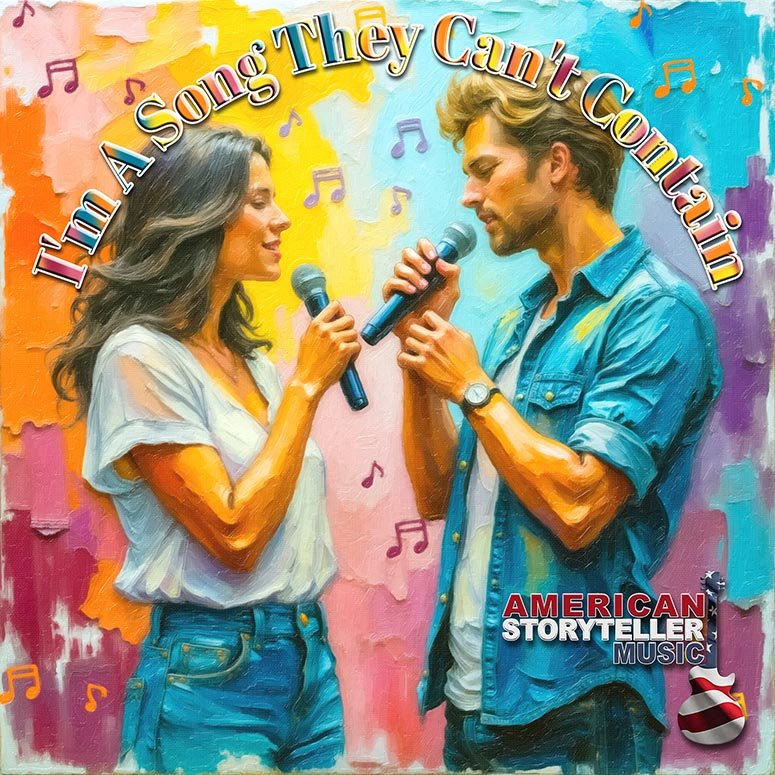
Streaming Services Music Link
"I'm A Song They Can't Contain"
Why I Wrote This Song
I wrote "I'm a Song They Can't Contain" about the particular ache of being loved by someone who wants a different life for you than the one you can actually live. The mother in this song is not a villain. She wants a doctor's life for her child because she believes that is what safety looks like, and she is not entirely wrong about the world. But the child at the piano is already gone, lost in songs that cut like knives, running scales in empty rooms at hours when nobody is listening. That gap between what someone wants for you out of love and what you are is one of the loneliest places a young person can stand.
The story behind the song is what happens in the bridge, and it is the reason I wrote the whole thing. She hears the midnight song. The silence stretches deep and long, and I wanted that silence to sit there uncomfortably, because that is the moment where it could go either way. Then she feels what he became. She does not necessarily approve, and she does not say anything at all. She simply understands, through the music, the thing he could never explain to her in words. That is the only kind of resolution this song was ever going to get, and I think it is the truer one. Being understood is not the same as being given permission, but for someone who has spent years feeling like a song nobody could hear, it is enough to step onto the stage with.
This is part of the Optimistic Humanism thread in Songs Across America, and it belongs there because I keep coming back to the idea that a person's real work is not decorative. It is not a hobby someone indulges until real life starts. For some people the music is the life, and asking them to trade it for something more sensible is asking them to be somebody else. I hope this one finds the kids still practicing where nobody can hear them, and the grown adults who put the instrument down forty years ago because somebody told them to be practical. What I want them to take from it is in the last line. The refrain was always theirs. Learning that is the whole journey, and it is never too late to stop asking permission to sound like yourself.
Genre:
Defiant alt-pop and rock with theatrical, arena-scale dynamics. A slinky 95 BPM groove rising from G minor to B-flat major for each chorus, opening on lone reverb-heavy felt piano and building through staccato string stabs into wide-panned distorted guitars, shimmering synth arpeggios, and a half-time trap beat. Intimate near-spoken verses open into a soaring belt, with a granular-delay bridge and a final chorus of stacked gang vocals, ending unresolved.
Theme:
Creative independence, family expectation and the love behind it, the search to be heard and understood, breaking free of imposed structure, self-acceptance, and the long journey from silence to voice.
Primary Subject:
A young pianist and songwriter pulled between a mother's hopes for a safer life and the music that is already who he is, and the night his mother finally hears him.
Mood:
Yearning, tense, and cathartic. Claustrophobic and aching in the verses, defiant and electrified through the choruses, tender at the bridge, and closing on hard-won freedom.
Core Message:
A person's creative voice is not a phase to be outgrown or a luxury to be traded for something more sensible. Being truly heard, even by someone who cannot give their approval, is what frees us to stop asking permission and finally sound like ourselves.
Lyrics Written by M. S. McKenzie, All Rights Reserved
[Instrumental Intro]
[Ethereal Piano]
[Verse 1]
Fingers dance across the keys
Melodies that set me free
Mother wants a doctor's life
But I'm lost in songs that cut like knives
Empty rooms and morning scales
Playing notes that never fail (never fail...)
[Pre-Chorus 1]
[Building Tension]
Stage lights dim, heart pounds loud
Facing down the waiting crowd
Every measure holds its weight
Like chains upon my destined fate (destined fate...)
[Chorus]
[Ethereal]
I'm a song they can't contain
Dancing through the walls of shame
Can anybody hear me now?
Behind the notes, behind the vow
They want structure, want to mold
But they can't cage this breaking hold (this breaking hold...)
[Verse 2]
[Dark Intensity]
Found my voice beneath the noise
Breaking free from their decoys
Every chord speaks what I mean
Finally, my truth's unseen
Music flowing from my rage
Writing stories off the page
[Bridge]
[Atmospheric Build]
Mother heard my midnight song
Silence stretched so deep and long
Then she felt what I became
Through the music of my name (of my name...)
[Chorus 2]
[Power Building]
I was silence in the night
Now I'm bringing sound to light
Finally, they hear me now
Breaking free, showing them how
No more classical, no more ties
Just the rhythm in my eyes
(in these eyes...)
[Break Down]
I'm still here
I'm still singing
I'm still writing
I'm still me...
[Final Chorus]
[Full Power]
Watch me step onto the stage
Turn these doubts into my rage
Finally becoming free
As I learn to let me be
No more hiding what I play
No more following their way
[Outro]
Fingers dance like healing rain
Finally learning this is my refrain...
[End]
Song Description:
"I’m A Song They Can’t Contain" is a defiant alt-pop/rock declaration of creative independence. The lyric traces a pianist-turned-songwriter who shrugs off family and industry expectations:trading the neat "doctor’s life" and classical scales for raw, electrified self-expression. From whispering midnight practice rooms to a blinding spotlight, the narrative moves from internal pressure to explosive catharsis as the artist reclaims their own name in sound.
Musically
Think a slinky 95 BPM groove that starts in G-minor and surges to B♭ major for each chorus:an ascent that mirrors self-liberation. A lone, reverb-heavy felt piano opens the intro; a filtered kick and muted bass creep in under Verse 1. Tension rises with staccato string stabs and reverse cymbal swells in the pre-chorus, then the chorus detonates with wide-panned distorted guitars, shimmering synth arpeggios, and a half-time trap beat that lets every downbeat land like a hammer. Verse 2 introduces gritty analog bass and syncopated claps, while the atmospheric bridge drenches the piano in granular delay and layers of word-less vocal pads before building into a full-band, arena-scale final chorus.
Vocally
A dynamic alto or tenor lead shifts from intimate, almost spoken phrasing in the verses to a soaring belt in each chorus. Subtle octave doubles and whispered echoes on phrases like “breaking hold” give the sense of voices in the protagonist’s head. During the bridge, a child-like backing vocal (or vocoder pad) hums the main melody, symbolizing the younger self finally heard.
Dynamics
The arrangement breathes in waves: minimalist piano + heartbeat kick for the intro; mid-level angst in Verse 1; a guttural burst in Chorus 1. Everything strips back to piano, low drone, and finger snaps beneath the breakdown mantra “I’m still here / I’m still singing,” then roars to maximum width for the final chorus with stacked gang vocals and crashing cymbals. The song ends abruptly on a lone, unresolved G-minor-add2 chord:leaving the listener hanging on the artist’s next move.
Imagery
Fingers that “dance across the keys,” critics circling “like flies,” and paint-strip lights that feel like interrogation lamps paint a vivid scene of performance anxiety turned rebellion. By the outro the “healing rain” of free-flowing notes suggests both cleansing and rebirth.
Overall
“I’m A Song They Can’t Contain” blends the theatrical edge of early Muse, the textural punch of Billie Eilish’s darker cuts, and the liberation-anthem spirit of Paramore. It dovetails with your Optimistic Humanism thread:championing authenticity over approval and reminding every listener-creator that the truest art begins the moment you stop asking permission.
Related Songs & Products:





~ Production Companies ~





Featured Songs

.jpg)
Leave a Tip